






Your wedding day moves quickly. The music, the hugs, the laughter, the speeches — it all blurs together in the best possible way. A wedding guest book slows that moment down. It gives your favorite people a place to pause, reflect, and leave something behind that lasts.
Unlike a stack of cards tucked into a box, a thoughtfully designed guest book becomes a keepsake you’ll return to for years. It holds handwritten advice from grandparents, inside jokes from college friends, and heartfelt notes from the people who showed up to celebrate your beginning. Done well, it feels less like a formality on a table and more like a living piece of your story.
This guide walks through what a wedding guest book really is, why couples love having one, and how to create a personalized version that your guests will genuinely enjoy flipping through and signing.
Jump to:
- What Is a Wedding Guest Book?
- Choosing the Right Style for Your Guest Book
- How to Make a Wedding Guest Book
- Wedding Guest Book Ideas
- How to Set Up Your Guest Book
What Is a Wedding Guest Book — and Why Have One?
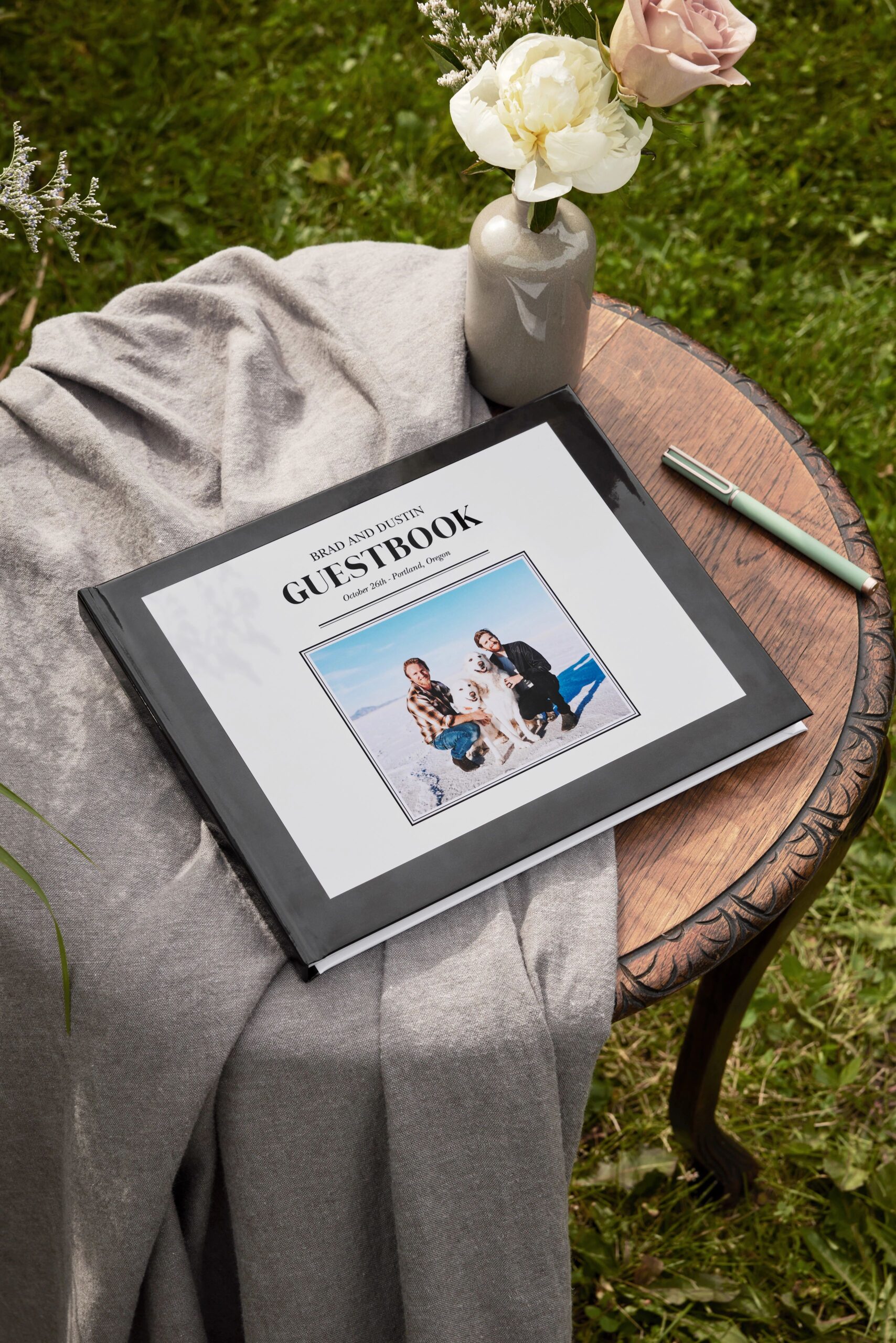
A wedding guest book is a dedicated place for guests to leave their names, well wishes, advice, and messages on your wedding day. Traditionally, it was a simple bound book near the entrance where guests signed as they arrived. Today, it has evolved into something far more meaningful.
Many couples now create personalized guest books that include engagement photos, relationship milestones, travel memories, or favorite moments together. Instead of blank pages alone, guests sign beside photos, within designed layouts, or across meaningful spreads that feel personal to your story.
Why couples love having one:
- It preserves voices and handwriting — something digital messages can’t replicate.
- It captures candid advice and emotional reflections you might miss during the day.
- It becomes a keepsake you’ll revisit on anniversaries.
- It often feels more interactive and engaging for guests when photos are included.
A guest book isn’t just documentation of who attended. It becomes a time capsule of how you were loved at the very start of your marriage.
Choosing the Right Style for Your Guest Book
A wedding guest book should feel cohesive with your overall celebration. It doesn’t have to match your wedding invitations exactly, but it should reflect the tone of your day.
Shutterfly guest books are available in a range of photo book sizes, including square and landscape formats, giving you flexibility depending on how you want guests to interact with it. Larger formats like 10×10 or 12×12 feel substantial and allow generous signing space, while 8×8 or 8×11 options are classic and easy to display.
You can also select from different cover types:
- Softcover for a lightweight, simple look.
- Hardcover (glossy or matte) for durability and a polished feel.
- Premium leather for a timeless, heirloom-style finish.
For pages and binding, you’ll choose between:
- Standard pages for a clean, classic structure.
- Standard layflat so spreads open more seamlessly.
- Deluxe layflat for thicker, more substantial pages with an elevated feel.
If you’re incorporating full-page photos or double-page spreads, layflat options can make images feel uninterrupted. If your focus is primarily on signing space, standard binding works beautifully. The goal is not to overcomplicate the decision — it’s to choose the format that feels comfortable in your hands and fits how you imagine guests interacting with it.
How to Make a Wedding Guest Book

Creating a personalized wedding guest book is easier than you might think — and when you take a little time to shape it around your story, it becomes something truly special. Here’s how to create one your guests will love signing and you’ll love reading for years.
1. Gather the Right Photos
Start by selecting images that tell your story. Engagement photos are a natural choice, but you can also include:
- Early dating photos
- Travel memories
- Holidays spent together
- Proposal moments
- Candid everyday snapshots
Choose a mix of portrait and landscape images so your layouts feel balanced. You don’t need hundreds — in fact, restraint makes the book feel more curated. Leave room for writing. The goal isn’t to create a dense photo album; it’s to create space for interaction.
2. Choose Your Size, Cover, and Binding
Before diving into layout, finalize your physical format. Larger books create a stronger presence on your welcome table, while smaller books feel intimate and approachable.
If you want guests to write longer messages comfortably, prioritize page space. If you’re including full-bleed spreads, consider layflat binding so images don’t disappear into the fold.
Choosing these details first helps you design more confidently without needing to reformat later.
3. Choose a Layout That Leaves Room to Breathe
When you’re designing your guest book, think about how it will feel in your guests’ hands. You want it to be beautiful — but also easy and inviting to write in.
Look for layouts that leave plenty of open space. A little white space goes a long way, giving friends and family room to write more than just their names. Simple backgrounds tend to work best, especially in lighter tones, so messages stand out clearly and feel easy to read later.
Pay attention to how photos are placed. If an image fills an entire page, make sure the facing page offers enough open area for notes. Subtle design elements can add polish, but they shouldn’t compete with the handwriting — that’s the real heart of the book.
Most importantly, imagine someone flipping through it during cocktail hour. It should feel natural to find a spot, pick up a pen, and leave a message without second-guessing where to write.
4. Customize Thoughtfully
Personalization goes beyond dropping in photos. Add small touches that guide your guests:
- A short welcome message on the first page
- A simple prompt like “Share your best marriage advice” or “Leave us a date night idea”
- Your wedding date and location
- Section titles if you’re organizing the book chronologically
Avoid overfilling pages with text. The handwritten notes are the real centerpiece.
5. Review Layout Spacing Carefully
Flip through every spread before ordering. Ask yourself:
- Is there enough blank space for multiple guests to sign?
- Are darker photos placed beside areas meant for writing?
- Does the flow feel natural from beginning to end?
You want the experience of signing to feel intuitive. Guests shouldn’t wonder where to write or feel cramped for space.
6. Order with Time to Spare
Guest books deserve the same planning window as other printed wedding pieces. Order early enough to review it in person before your wedding day. Having it in hand lets you confirm that paper thickness, finish, and overall feel match your expectations.
Wedding Guest Book Ideas
The most meaningful guest books don’t feel pulled from a template — they feel unmistakably yours. When guests flip through the pages, they should immediately recognize your story, your style, and the little details that make your relationship what it is.
If you’re not sure where to start, these ideas can help spark something that feels natural to you.
A Timeline of Your Story
Begin at the beginning. Early dating photos, awkward selfies, favorite trips, the moment you got engaged — let the book unfold like a visual love story.
When guests sign beside different chapters of your relationship, it creates something layered and emotional. Years from now, you won’t just read their messages — you’ll relive the season of life you were in when they wrote them.
An Engagement Session Spotlight
If you have engagement photos you absolutely love, build the book around them. Full-page images paired with open signing space create a cohesive, polished look without feeling overdesigned.
This approach keeps the aesthetic elevated and timeless. It’s especially beautiful if your engagement session reflects the setting or vibe of your wedding day — coastal, city chic, garden romance, modern minimalist.
Guided Prompts for More Meaningful Notes
Some guests happily write paragraphs. Others freeze at a blank page.
A gentle prompt can make all the difference. Instead of leaving only open space, you might invite guests to share:
- A favorite memory with you as a couple
- One piece of marriage advice
- A future date night idea
- Where you should travel next
- A prediction for your 10-year anniversary
These small invitations often lead to more thoughtful, heartfelt messages — and sometimes the funniest ones, too.
A Minimal, Signature-Forward Book
If you love a clean look or are hosting a large guest list, a simpler format may feel right. Open with a few favorite photos, then dedicate the majority of the book to airy pages designed primarily for writing.
This style is classic and practical without sacrificing elegance. It gives every guest plenty of room and keeps the focus exactly where it belongs — on the messages themselves.
An Anniversary Time Capsule
One of the most special twists is turning your guest book into a future surprise. Include a note at the beginning inviting guests to write something you’ll reread on your first, fifth, or tenth anniversary.
Imagine opening it years later and seeing their handwriting again — advice that suddenly makes more sense, predictions that make you laugh, words of encouragement that still feel steady and true. It transforms the book from a wedding-day detail into something that continues to unfold alongside your marriage.
How to Set Up Your Guest Book So Guests Actually Use It
A beautiful guest book only becomes meaningful if people interact with it. A little planning ensures it feels inviting, natural, and impossible to miss — not like an afterthought sitting off to the side.
1. Choose the Right Location
Place your guest book somewhere guests will naturally pass and linger — near the entrance, escort card display, or bar during cocktail hour. Avoid dim corners or areas with heavy traffic where people feel rushed.
If guests can comfortably pause for a moment, they’re far more likely to leave a thoughtful message instead of just a quick signature.
2. Make It Easy to Write
Provide high-quality pens that write smoothly and won’t bleed through the pages. Set out more than one so guests don’t have to wait.
If you’ve chosen layflat pages, take advantage of them — guests won’t need to press down the center seam, making writing easier and neater. Small details like this genuinely improve the experience.
3. Give Gentle Direction
Some guests don’t know what to write beyond their names. A small framed note beside the book can guide them with a simple prompt like:
- “Share your best marriage advice.”
- “Leave us a date night idea.”
- “Write something we can read on our first anniversary.”
Clear direction turns a blank page into an invitation.
4. Keep It Visible Throughout the Night
If you have a larger guest list, ask someone in your wedding party to casually remind people to sign. This doesn’t need to be an announcement — just a friendly nudge throughout the evening.
The goal is steady participation, not a last-minute crowd trying to squeeze messages in before the send-off.
Related Resources on Wedding Guest Books
A wedding guest book may seem like a small detail in the middle of a big celebration, but it becomes one of the few pieces you’ll return to again and again. Long after the flowers fade and the music quiets, you’ll still have the handwritten notes, the advice, the inside jokes, and the steady encouragement from the people who showed up for you. When you design it with care and create space for your guests to truly participate, it turns into more than a book on a table — it becomes a reminder of the community surrounding your marriage from the very beginning.
